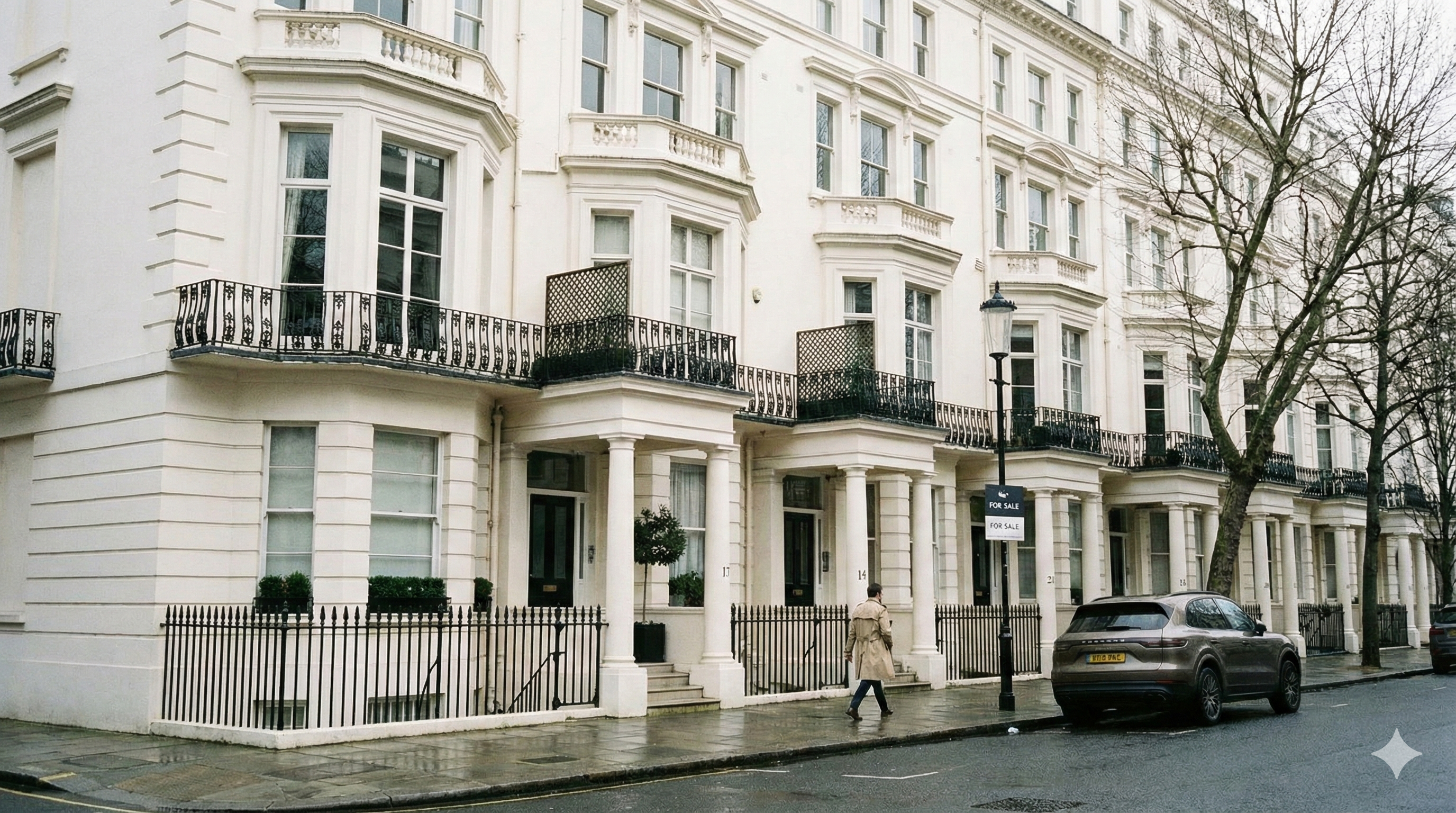
London has always been a city of contrasts; historic terraces beside modern penthouses, quiet garden squares just minutes from bustling commercial hubs. Yet nowhere are these contrasts more visible than in the capital’s most exclusive neighbourhoods, where property prices continue to set new benchmarks.
Recent data has once again brought the spotlight onto London’s elite districts, revealing a growing cluster of postcodes where the average home now sells for more than £1 million. From royal-adjacent enclaves in Westminster to long-established luxury quarters in Mayfair and Belgravia, these postcodes are shaping not just the housing market, but the lifestyle narrative of the capital itself.
This article explores what defines these high-value areas, why demand remains resilient, and how the London high-end property market continues to evolve in 2026.
The Rise of London’s Million-Pound Postcodes
According to analysis based on Land Registry sales data, no fewer than 11 London postcodes now exceed the £1 million mark for average sold prices. Leading the ranking is SW1A, home to landmarks such as Buckingham Palace, Whitehall and St James’s, where average prices have reached approximately £2.375 million.
Close behind are:
- SW1X – Belgravia and Knightsbridge
- W1K – Mayfair
- W1J – St James’s
- SW3 – Chelsea
These districts are not new to prestige, but what is striking is the consistency of demand, even amid higher interest rates and broader economic uncertainty.
How the London High-End Property Market Is Being Redefined
While price alone once defined luxury, today’s buyers are increasingly driven by a combination of location, lifestyle, security, and long-term value.
In areas such as Mayfair and Kensington, buyers are often:
- International investors seeking stable assets
- Families prioritising proximity to top schools and private healthcare
- Professionals relocating to central hubs for hybrid work patterns
The London high-end property market is no longer just about grand townhouses. Demand is rising for:
- Turnkey apartments with concierge services
- Secure developments with private parking
- Homes offering outdoor space in dense urban settings
What remains constant is the premium placed on postcode reputation. In prime central areas, a single street can command a dramatic price difference based on historic prestige and access to key amenities.
Beyond Prices: What Defines a Prime London Postcode?
The value of London’s most expensive areas extends beyond square footage. Several factors consistently shape their desirability:
1. Heritage and Architecture
Many of these neighbourhoods feature Georgian and Victorian terraces, listed buildings, and carefully preserved streetscapes that limit new supply.
2. Cultural and Diplomatic Influence
Embassies, galleries, private members’ clubs and Michelin-starred restaurants anchor these areas as global destinations.
3. Access and Connectivity
Despite their exclusivity, prime postcodes offer fast access to:
- Heathrow and City Airport
- Major rail terminals
- The West End and financial districts
4. Long-Term Capital Stability
Historically, prime central London has shown greater resilience during downturns and faster recovery in growth cycles.
Who Is Buying in These Areas Today?
The profile of buyers in high-end London has subtly shifted over the past five years.
Where overseas investors once dominated, today’s market includes:
- UK-based entrepreneurs relocating wealth into property
- Returning expatriates
- Multi-generational families consolidating assets
There is also growing interest in downsizing within prime areas; moving from large townhouses into luxury apartments while remaining within the same postcode.
This internal mobility is one of the quiet drivers of transaction volume across central London.
Life in Prime Central London: More Than Just Property
Living in one of London’s most expensive postcodes is not only about owning an asset; it is about lifestyle.
Residents benefit from:
- Walkable access to Hyde Park, Green Park and Kensington Gardens
- Cultural institutions such as the Royal Opera House and Tate Britain
- World-class retail on Bond Street and Sloane Street
At the same time, these areas face practical challenges: narrow streets, limited parking, strict building regulations and complex logistics when households change.
Moving Within the Market: A Natural Part of the Property Cycle
As homeowners upgrade, downsize, or relocate within these elite districts, the physical process of moving becomes an unavoidable; and often underestimated, part of the journey.
In prime postcodes, a move may involve:
- Listed buildings with access restrictions
- Timed lift bookings and concierge coordination
- Fragile, high-value furniture and artworks
- Temporary storage during refurbishments
This is where careful planning becomes as important as legal completion.
How Movevan Supports Transitions in Prime London
Behind every sale and purchase, there is an often-overlooked stage that follows: organising how a household is safely transferred from one address to another.
Movevan supports homeowners and residents across Central London through a network of carefully selected professionals, offering:
- Moving van rentals in London – flexible vehicles suited to city access and short-distance relocations.
- Man and van hire services in London – ideal for apartment moves and tight-access properties.
- Man with a van removals in London – practical support for partial moves and internal relocations.
- House removal company in London – full-service residential moves across prime and suburban areas.
- Furniture delivery service – secure transport for individual items and new purchases.
- Storage – short- and long-term solutions during renovations or phased moves.
Each service is designed to fit the unique demands of London living, without disrupting the wider narrative of a high-value move.
Looking Ahead: What’s Next for Prime Postcodes?
Despite shifting global conditions, analysts broadly agree that prime central London remains structurally undersupplied. Planning constraints, heritage protections and limited land ensure that scarcity will continue to support long-term values.
Emerging trends include:
- Increased demand for energy-efficient retrofits
- Growth in managed residential developments
- Rising interest in fringe prime areas such as Fitzrovia and Marylebone
Where Property Meets Personal Change
London’s most prestigious postcodes are more than symbols of wealth; they are living, evolving communities that reflect how the city itself is changing.
As the capital’s high-value districts continue to redefine luxury, one truth remains unchanged: property transactions may be financial decisions, but moving home is a deeply personal one.
In a market where detail matters, every transition deserves careful handling.
Credit: The Standard
Leave a Reply