The UK’s student accommodation sector continues to evolve as universities and private partners respond to rising demand, sustainability goals, and changing student expectations. A recent announcement involving Unite Students and Newcastle University has drawn attention across the higher education and property sectors, marking another significant step in reshaping how student living is planned and delivered.
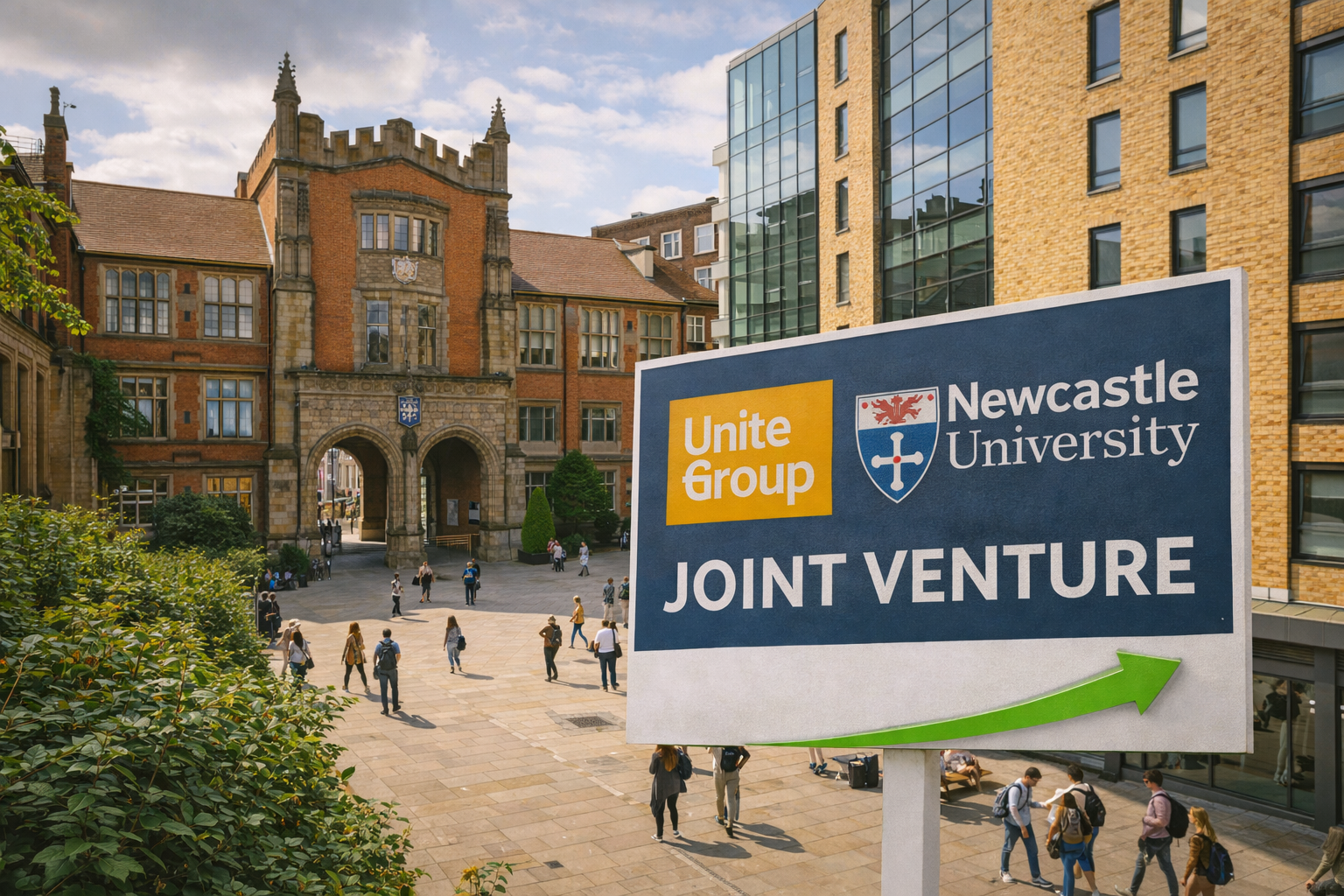
The Unite Group Newcastle University joint venture represents not only a large-scale development project but also a wider shift in how universities think about long-term infrastructure, student wellbeing, and the broader ecosystem that supports academic life.
Understanding the Castle Leazes Development
The joint venture focuses on the redevelopment of the historic Castle Leazes site in Newcastle, with plans to deliver over 2,000 new purpose-built student accommodation beds. The project is scheduled to be completed in phases, with openings expected during the 2028/29 and 2029/30 academic years.
According to official disclosures, the scheme is designed to provide modern, high-quality accommodation while maintaining close proximity to the university campus. This approach reflects a growing preference for integrated living environments that reduce commuting time and support stronger campus communities.
Why University – Private Partnerships Are Increasing
Across the UK, universities are increasingly turning to long-term partnerships with specialist accommodation providers. This model allows institutions to:
- Expand capacity without diverting academic funding
- Deliver professionally managed housing at scale
- Meet sustainability and compliance standards
- Respond to growing domestic and international student numbers
Industry analysis from organisations such as Universities UK highlights that student housing shortages remain a challenge in many cities, making strategic investments essential for future growth.
The Castle Leazes project fits squarely into this national context, addressing both immediate and long-term pressures on student housing supply.
Unite Group Newcastle University Joint Venture and Its Wider Impact
Beyond the physical development, the Unite Group Newcastle University joint venture signals broader changes in how student life is structured. Purpose-built accommodation increasingly acts as a foundation for:
- Student wellbeing and mental health
- Community building
- Safety and accessibility
- Sustainability and energy efficiency
As universities invest in accommodation that supports the full student journey, attention naturally extends to the practical realities of moving into, between, and out of these spaces over time.
Student Mobility: An Often Overlooked Part of the Experience
While accommodation developments attract headlines, student mobility is an equally important; if less visible, aspect of university life. Students typically move multiple times during their academic journey:
- From home to first-year accommodation
- Between halls and private housing
- From university cities to new locations after graduation
Reports from the Higher Education Statistics Agency (HESA) show that student populations in major UK cities are increasingly mobile, particularly international students and postgraduates.
This constant movement shapes how students experience university life and how cities adapt to seasonal population shifts.
Urban Student Living and UK Cities
Large-scale developments such as Castle Leazes also influence the surrounding urban environment. Concentrated student housing can:
- Reduce pressure on private rental markets
- Improve neighbourhood planning
- Support local economies
- Create predictable patterns of arrival and departure
Cities like London, Manchester, Birmingham, and Newcastle all experience cyclical student migration, particularly at the beginning and end of academic terms. Understanding these patterns is essential for policymakers, universities, and service ecosystems that support student living.
Where Practical Support Fits into the Bigger Picture
Although accommodation is the anchor point, the transition itself; arriving, settling in, and eventually moving on, plays a crucial role in student wellbeing. Smooth transitions help reduce stress, especially for:
- First-year students living away from home for the first time
- International students unfamiliar with UK cities
- Graduates relocating after completing their studies
As the UK student accommodation sector becomes more structured and professionally managed, the surrounding support infrastructure naturally evolves alongside it.
Movevan and the Student Transition Ecosystem
As part of this broader conversation around student living and mobility, Movevan exists as a concept aligned with future needs rather than immediate promotion.
In cities like London, where student populations are large and highly mobile, practical support services often form an invisible backbone to academic life. These can include:
- Student moving services to support relocations between term-time accommodation
- Packers and movers to assist with packing, loading, and transport
- Access to appropriate packaging materials for safeguarding personal belongings
- A flexible man with a van removal company in London for smaller or short-notice moves
- Same day van hire options during peak academic periods
In fast-paced urban environments, such support helps reduce disruption during key transition points in the student calendar.
This section reflects a wider industry landscape rather than current operational claims, acknowledging how such services fit into the overall student experience when accommodation developments reach maturity.
Long-Term Planning in Student Accommodation
Large-scale accommodation projects require years of planning, coordination, and investment. When universities work with experienced partners, the result is housing that supports not only immediate demand but also future student populations, urban development goals, and sustainability commitments.
The Unite – Newcastle partnership highlights how long-term thinking can create stability for students while delivering measurable benefits for institutions and the cities they operate in.
Looking Ahead
With major projects like Castle Leazes underway, the UK’s student accommodation landscape is clearly moving toward integrated, sustainable, and student-focused solutions. These developments influence far more than where students sleep — they shape how students arrive, live, and eventually move on to the next chapter of their lives.
As universities continue to invest in the future, the supporting ecosystem around student living will continue to evolve quietly alongside them.
A Turning Point for University-Led Housing Development
The Unite Group Newcastle University joint venture is a significant marker in the ongoing transformation of UK student accommodation. As planning and development progress, the project reflects wider shifts in how universities and partners are approaching long-term student housing strategies.
Understanding these developments provides valuable insight into the future of student living; not just in Newcastle, but across the UK.
Credits: London Stock Exchange
Leave a Reply