Southwark has long been one of London’s most active boroughs when it comes to urban regeneration and affordable housing delivery. In recent years, the council has accelerated its strategy to increase the supply of social and council homes, responding to mounting pressure from housing waiting lists and changing demographic needs.
According to a recent report, Southwark Council is planning the delivery of hundreds of new council and affordable homes as part of its wider housing programme. These proposals form part of a multi-year pipeline designed to tackle long-term shortages and stabilise local communities.
In Southwark, where developable land is limited and estates are densely occupied, each new council scheme effectively reshapes how existing housing stock is released, refurbished, or reallocated across the borough.
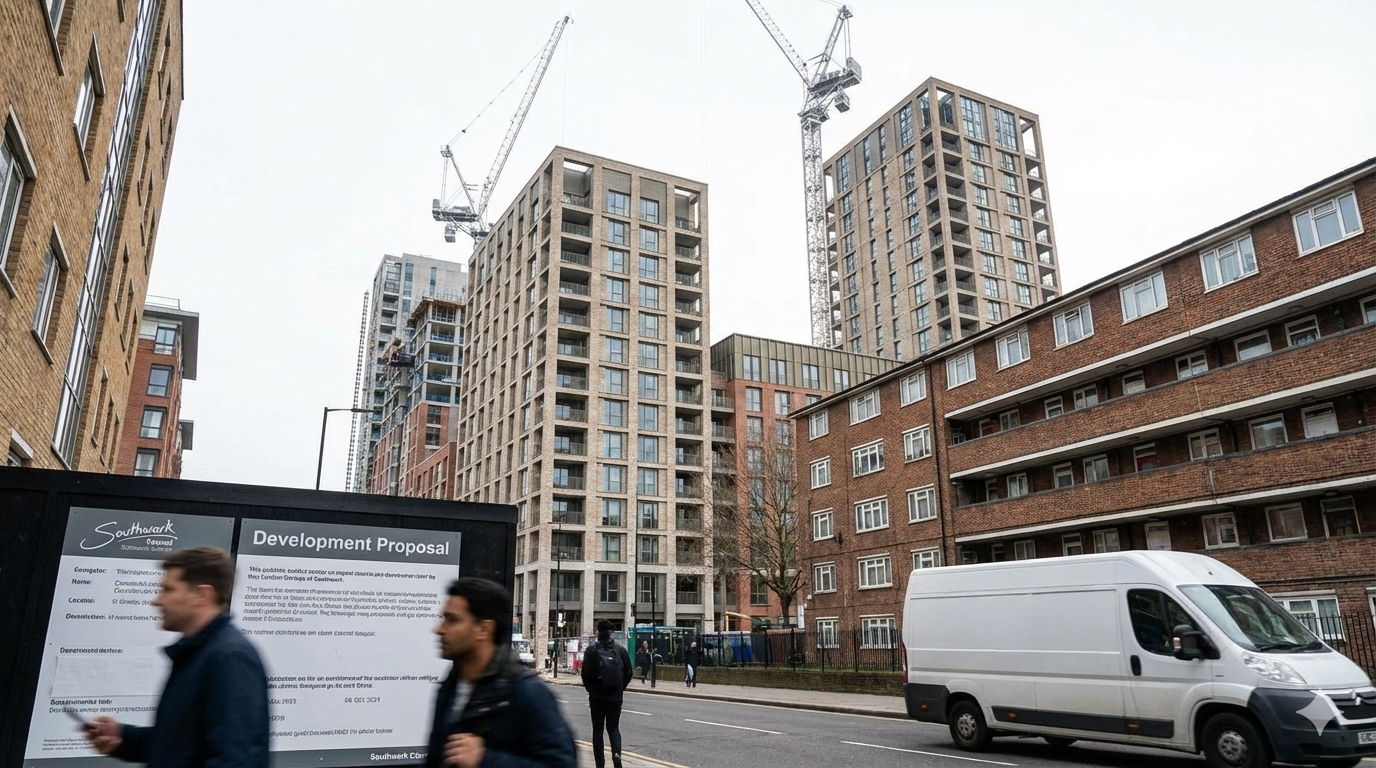
Housing Pipelines and How They Shape Urban Movement
Major social housing developments tend to trigger several layers of residential movement.
New council homes rarely fill in a single wave; they are fed into staged allocation rounds that redraw waiting lists, priority bands, and decant schedules across multiple estates.
In boroughs like Southwark; with dense neighbourhoods such as Peckham, Bermondsey, Camberwell and Elephant & Castle, even a single large housing scheme can influence:
- Local population density
- School admissions and catchment areas
- Transport usage
- Demand for short-term and long-term accommodation
These shifts rarely happen overnight. Instead, they unfold over several years, in phases aligned with construction timetables, planning approvals, and allocation processes.
This long horizon is why housing pipelines are closely monitored not only by policymakers, but also by infrastructure planners, logistics providers, and local service industries.
How Southwark Council Housing Development Plans Influence Relocation Patterns
Southwark council housing development plans are not simply about increasing supply; they reshape how and where people live across the borough.
When new social housing is delivered:
- Residents may relocate from temporary or unsuitable accommodation
- Families may move closer to schools or support networks
- Regeneration areas may see turnover as estates are redeveloped
- New communities form around transport hubs and town centres
Over time, these changes create predictable waves of residential movement. For local authorities, this helps inform planning for schools, healthcare, and transport. For residents, it means preparing for changes in neighbourhood composition and local services.
For the logistics and relocation sector, such pipelines signal future demand; not immediately, but steadily, as each phase of development reaches completion.
Southwark’s Strategic Housing Context
Southwark Council publishes detailed housing and regeneration strategies outlining where growth is expected and how sites will be delivered.
Key priorities include:
- Increasing genuinely affordable homes
- Regenerating ageing estates
- Reducing reliance on temporary accommodation
- Supporting sustainable, mixed-tenure communities
These objectives are closely aligned with the London Plan and Greater London Authority housing targets.
What is notable is the scale and consistency of Southwark’s programme. Rather than one-off schemes, the borough operates a rolling pipeline of developments, meaning relocation demand tends to be continuous rather than sporadic.
The Long-Term Relocation Impact
Although current projects remain at the planning or early delivery stage, experience from previous regeneration schemes suggests several long-term trends:
- Increased internal movement within the borough
- Higher short-distance relocations between neighbouring wards
- Greater demand for temporary storage during phased moves
- Staggered relocation schedules tied to handover dates
These patterns are especially common in estate regeneration, where decanting and phased rehousing occur over multiple years.
Understanding this cycle allows residents, housing officers, and service providers to plan more effectively; reducing disruption and improving settlement outcomes.
What This Means for Future Residents
For households who may eventually be allocated one of these new homes, relocation is rarely a single event. It often involves:
- Transitional accommodation
- Temporary downsizing or upsizing
- Staged moves aligned with construction completion
- Storage of furniture and belongings during interim periods
In many cases, families move more than once before settling into their final home. This makes forward planning essential, even years before a move actually takes place.
Movevan Services for Future Relocations
When relocation phases eventually begin, households typically require a combination of specialist services. At that point, residents often look for:
- Moving van rentals in London – flexible vehicle hire for short and medium-distance relocations
- Man with a van removals in London – assisted moves for flats and smaller households
- House removal company in London – full-service removals for family and multi-room moves
- Furniture delivery service – safe transport of large or newly purchased items
- Storage – short-term and long-term solutions during phased rehousing
These services usually come into play once allocations are confirmed and handover dates are scheduled.
Over the coming years, the key challenge will be integrating new supply into an already constrained housing system without creating bottlenecks in transfers, temporary accommodation, and estate regeneration programmes.
Relocation works best when it is planned, not improvised. Movevan provides the vehicles, people, and systems needed for complex urban moves.
Credit: Property Wire
Leave a Reply