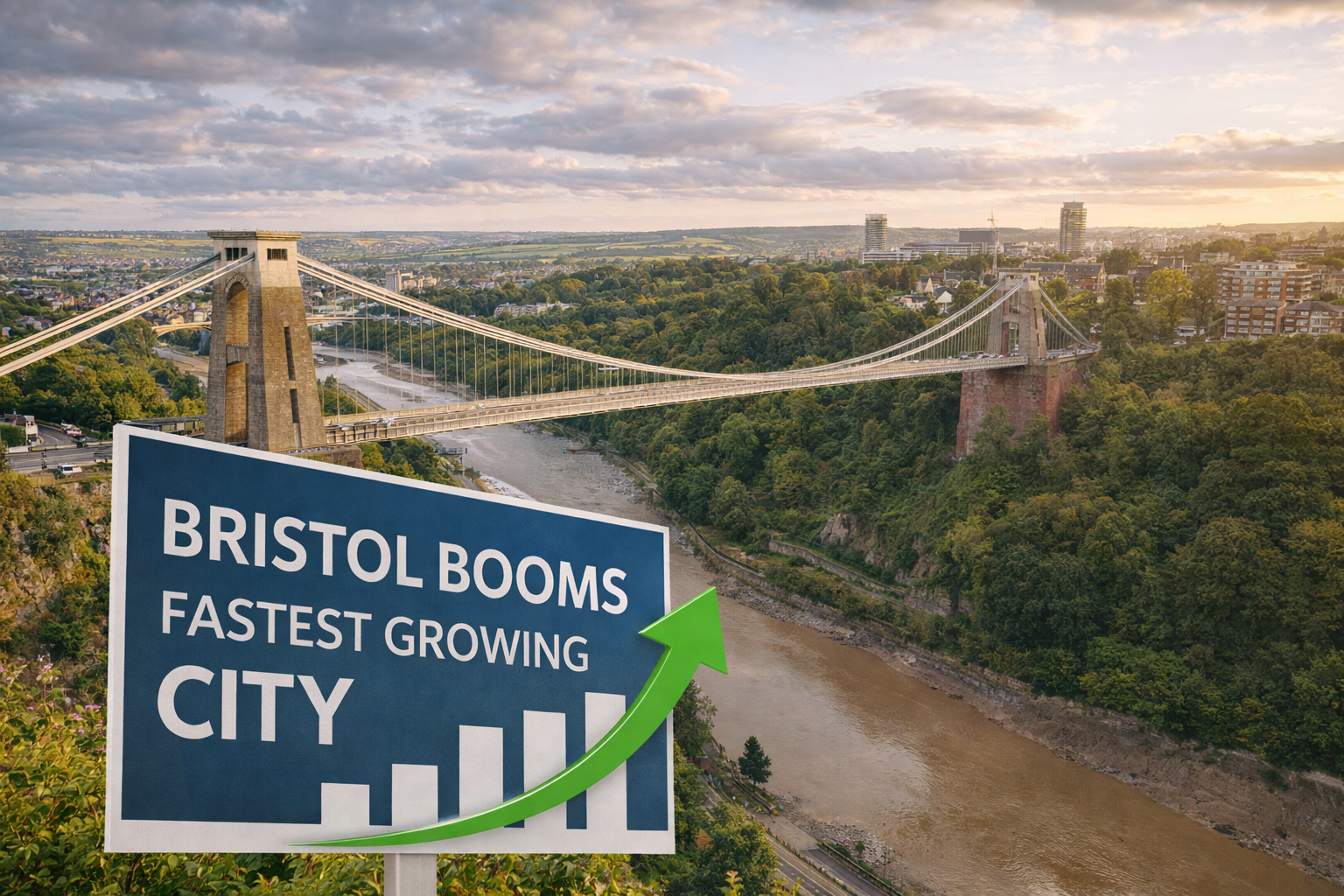
Recent studies tracking UK urban performance confirm that Bristol booms as the fastest growing regional city, with city-wide footfall increasing by 4.5 per cent, well above the national average. This rise reflects sustained engagement rather than temporary recovery, indicating long-term confidence in Bristol as a place to live, work and invest.
Unlike short-lived urban surges driven by single developments or tourism spikes, Bristol’s growth is rooted in structural change. Population movement, employment resilience and coordinated infrastructure planning have collectively reshaped how the city functions on a daily basis. As a result, Bristol has transitioned from being a strong regional centre to one of the UK’s most consistently active cities outside London.
Measured Growth, Not Momentum Alone
Footfall is widely recognised by urban analysts as a reliable indicator of city health. It reflects not only visitor numbers but also how residents, workers and businesses interact with shared spaces. In Bristol’s case, increased activity has been recorded across retail areas, transport corridors and mixed-use districts rather than being concentrated in isolated pockets.
Industry reports note that Bristol’s growth has remained stable over successive quarters, reinforcing the view that this is not a rebound effect but an established pattern of use. This consistency distinguishes Bristol from cities experiencing uneven or seasonal recovery and supports its classification as a leading regional performer.
Economic Balance as a Foundation
One of Bristol’s defining strengths is the balance of its economy. The city supports established industries such as aerospace, engineering and professional services alongside fast-growing sectors including digital technology, creative media and advanced research.
Economic assessments consistently show that cities with diversified employment bases tend to retain talent more effectively and experience steadier residential demand. Bristol reflects this pattern clearly. Rather than relying on a single growth driver, it benefits from overlapping industries that provide stability during periods of national or global uncertainty.
This balance has played a significant role in sustaining daily activity levels and reinforcing confidence among businesses choosing to establish or expand their presence in the city.
Urban Planning and Infrastructure Investment
Bristol’s recent expansion has been shaped by strategic planning rather than reactive development. Regeneration projects, transport upgrades and improvements to public space have been delivered in coordination, supporting growth without placing disproportionate pressure on any single area.
Transport initiatives have focused on improving connectivity between residential neighbourhoods, employment centres and cultural districts. Enhanced pedestrian access, improved cycling infrastructure and better public transport integration have increased mobility across the city while supporting sustainable travel choices.
These measures have contributed directly to increased footfall and improved accessibility, reinforcing Bristol’s ability to accommodate growth without compromising functionality or quality of life.
Bristol’s Established Urban Identity
Beyond economic and infrastructural indicators, Bristol’s appeal is also cultural. The city has a well-established reputation for creativity, independent enterprise and community-led initiatives. Cultural venues, waterfront districts and neighbourhood centres contribute to a sense of place that resonates with both long-term residents and new arrivals.
Retail and leisure hubs such as Cabot Circus continue to play a central role in daily city activity, while regenerated public spaces around the harbourside and city centre support year-round engagement.
Bristol’s designation as a UNESCO City of Film further reinforces its cultural profile, reflecting international recognition of its creative output and heritage.
A Regional City with National Connectivity
Bristol’s growth is also closely linked to its connectivity. Strong rail links to London and the South East, combined with access to the wider South West and Wales, position the city as a strategic hub rather than a peripheral alternative.
As flexible and hybrid working models have become standard across many sectors, relocation decisions are increasingly influenced by quality of life and long-term practicality. Bristol’s ability to offer professional opportunity without the intensity of the capital has contributed to increased movement between cities, particularly along the London–Bristol corridor.
This pattern reflects a broader national shift rather than a local anomaly, with regional cities playing a more prominent role in the UK’s residential landscape.
Why Bristol Continues to Stand Out
When compared with other UK regional cities, Bristol consistently performs strongly across multiple indicators:
- Above-average footfall growth
- Sustained inward population movement
- Continued public and private investment
- Stable employment across diverse sectors
These factors collectively explain why Bristol booms as the fastest growing regional city in a way that is both measurable and durable. Growth here is not driven by short-term incentives or speculative development but by long-term alignment between people, infrastructure and opportunity.
Movevan: Supporting Relocation into a Growing City
Relocating between major cities requires planning, coordination and practical experience. Movevan operates with an understanding of the logistical demands involved in long-distance and urban relocations, particularly between London and high-growth regional cities such as Bristol.
Movevan Services
Each service is delivered with an emphasis on reliability, timing and care, reflecting the realities of modern relocation rather than promotional promise. Structured processes and experienced handling ensure that moves are managed efficiently from collection through to delivery.
A City Defined by Sustained Confidence
Bristol’s rise reflects a wider rebalancing of UK urban life. As regional cities take on greater economic and cultural significance, Bristol stands out for the consistency and depth of its growth.
With evidence continuing to show that Bristol booms as the fastest growing regional city, its trajectory appears firmly established. For those planning relocation, the city represents stability, opportunity and long-term value within a national context that increasingly favours well-connected regional centres.
Supported by experienced relocation services and informed planning, moving into Bristol aligns naturally with the direction in which the city; and the wider UK, is heading.
For removals from London to Bristol, Movevan provides structured, dependable moving support to help your relocation run smoothly.
Credits: Avison Young
Leave a Reply